


Intelligenza Circolare brings together a mosaic of eco-innovative practices developed at national and international level by institutions, universities, companies, designers, foundations and civil society actors. What unites them is the need to “design and redesign” supply chains, digital infrastructures, and models of use, reuse and regeneration.
These best practices clearly reveal the drive towards a cultural shift: from the “polluter pays” principle to a “do no significant harm” approach, through a regenerative mindset.
Discover all the best practices!

CE-RISE
Erion
Technologies for circularity
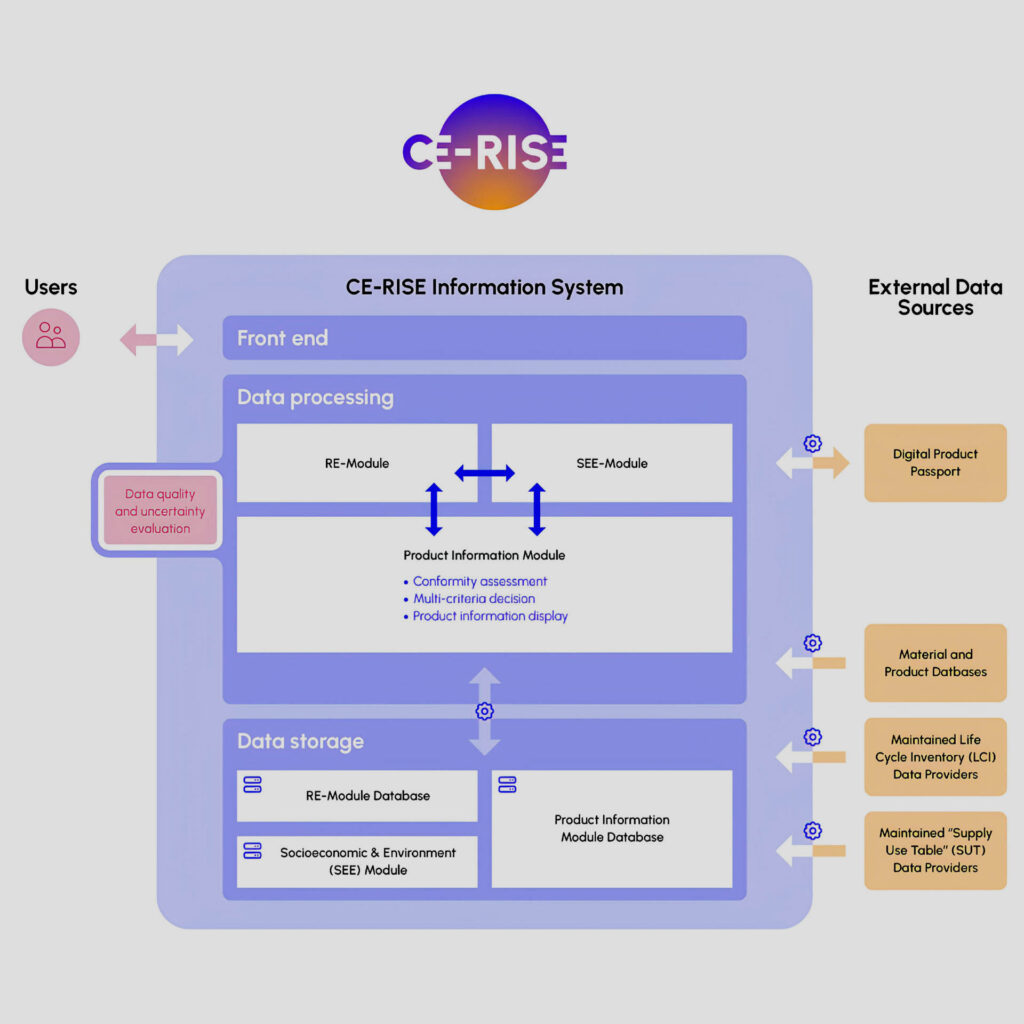
Through an integrated resource information system, the reuse, recovery and recycling of electronic waste are optimised. Information on the material composition of products will be integrated into the Digital Product Passport (DPP), together with the Product Environmental Footprint (PEF) and socio-economic and environmental (SEE) impacts, enabling the traceability of materials throughout the entire supply chain. A free-access software application will also be developed to make DPP information available to all stakeholders, including consumers and policymakers.

ECOSWEEE
Erion
Improving WEEE collection
Through pilot projects in 12 countries, including Italy, the project tested strategies to increase the collection of small WEEE and portable batteries across Europe, assessing approaches such as deposit-refund systems, take-back programmes, postal returns and in-store drop-off points. Erion coordinated three pilot projects, testing visible fees, deposit-refund systems and the use of lockers on e-commerce platforms. The projects involved more than 1,000 citizens, collecting 100 kg of WEEE in just a few days, with 78% of participants rating them positively.
CERES
Erion
Circular economy training
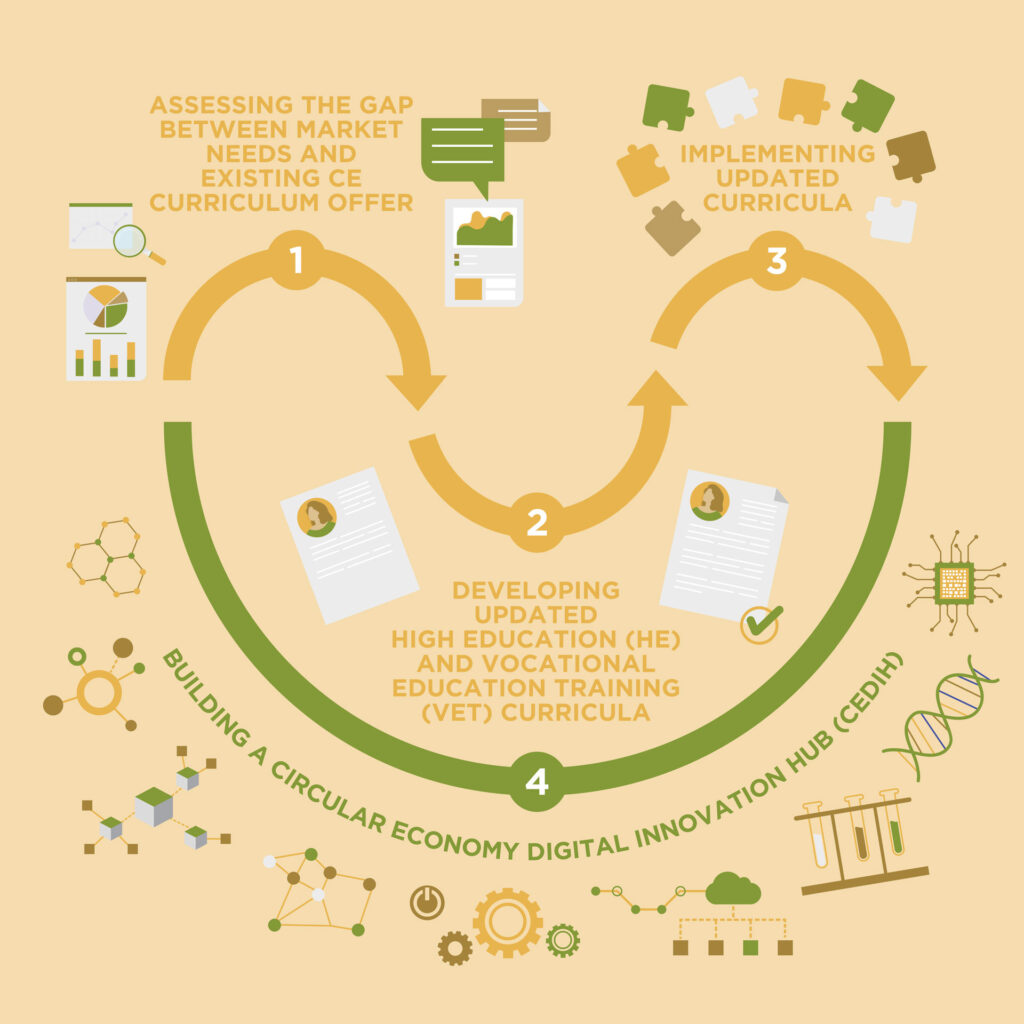
The CERES project (Circular Economy Innovation Ecosystems Redesigning Skills) aims to support the ecological transition of the production system through circular economy education. Funded by the European Erasmus+ programme, CERES stands out for its integrated approach, combining theoretical and practical training and addressing topics such as digitalisation, entrepreneurship and sustainable business models. The project focuses on four sectors: WEEE, automotive, textiles and waste from the wind industry.

Compostiamo
ISIA Faenza
Community composting and local governance
Compostiamo is a participatory programme developed by ISIA Faenza in collaboration with the Union of Municipalities of Romagna Faentina, the Hera Group and the SECAP (Sustainable Energy and Climate Action Plan). The project addresses organic waste by promoting community composting through purpose-designed devices and information campaigns targeting citizens. Applying ecodesign principles, the project prioritises prevention and the reuse of organic matter, turning waste into a resource for soil regeneration. Its environmental impact is reduced through lower transport needs and emissions, while its social effectiveness is measured by increased citizen engagement and the creation of conscious local circular loops.

CRM HUB
ENEA
An infrastructure for urban mining and ecodesign in the field of CRM
Funded under Italy’s NRRP (Mission 7 REPowerEU, Investment 8), the CRM HUB is a major research infrastructure currently under development, aimed at promoting the adoption of integrated technologies for urban mining and ecodesign, increasing the recovery and recycling rates of critical raw materials and accelerating innovation in the field of strategic materials. The infrastructure will comprise six laboratories located at ENEA’s research centres in Brindisi, Casaccia and Faenza, ensuring a distributed presence across the country, with central coordination and a systemic management approach. The CRM HUB strengthens ENEA’s position in the circular economy and consolidates the link between research, industry and local communities.

EcoCarbonio
ENEA
A circular economy for carbon fibres
In the aeronautics and clean energy sectors, the growing use of carbon fibre composites leads to the accumulation of large quantities of waste that is not recovered and is often sent to landfill. To address this issue, the EcoCarbonio project introduces an industrial textile process for the production of eco-innovative fabrics made from recycled carbon fibres and thermoplastic fibres. These materials can be reused to produce polymer composites for structural applications, offering high performance and a reduced environmental impact. Recyclability analyses and life cycle assessments (LCA) confirm the superior environmental performance of the materials developed. The project is funded under the Lombardy Region’s “Hub Research and Innovation” call, 2014–2020.

Demetra
ENEA
Aquaponics and waste reuse for a green food production system
The Demetra project aims to develop an integrated food system capable of producing food with high nutritional value and low environmental impact in extreme settings, such as underground spaces, disused industrial sites or large urban buildings. Through smart aquaponics systems, combining aquaculture and hydroponics, Demetra also integrates an advanced waste reuse model, transforming organic components into high-value products: microalgae, insects, bioactive molecules for functional foods and biopolymers. Demetra demonstrates how biocircular technologies can contribute to food security and resource regeneration. The project was funded by the Italian Ministry of Enterprises and Made in Italy.

RespiRo
Metropolitan City of Rome Capital
Urban greenery in the city of the future
Among the initiatives promoted by the Metropolitan City of Rome Capital as part of the ecological transition is a large-scale urban reforestation programme supported by Italy’s NRRP, which will create 65 new urban forests and plant one million trees across the metropolitan area. RespiRo is the communication project developed to support this initiative on the occasion of the seventh edition of the Roma Design Experience at ISIA Roma Design. In addition to highlighting the environmental and health benefits of reforestation, RespiRo emphasises the social dimension of sustainability, presenting green spaces as a collective asset to be protected and passed on to future generations, as well as a means of strengthening the connection between citizens and their local area.

SSpice It
Metropolitan City of Rome Capital
Training on green and digital topics in the food and catering sector
The SSPICE IT project – Sustainability Skills Program for International Catering Operators & Entrepreneurs through Integrated Training – was created to raise awareness among teachers and students at vocational training centres in the hospitality sector about the importance of sustainability, while also modernising VET curricula by integrating green, digital and entrepreneurial skills. The results highlight the project’s impact: a multilingual training programme available to teachers and students, an app in seven languages, more than six hundred Open Badges awarded, international mobility opportunities and the creation of a community of practice that has strengthened dialogue between schools, businesses and associations.

Sustainable Corn Consumption
Fundação Armando Alvares Penteado (Brazil)
From corn to packaging: a circular approach
Corn on the cob is commonly consumed in Brazilian cities, where it is often sold by street vendors and served in single-use packaging. An experimental project transformed waste into sustainable biomaterials, converting corncobs into durable bioplastics and creating circular packaging, prioritising material reuse and recovery. The environmental impact is reduced through the amount of corncobs reused, the replacement of polystyrene and the biodegradability of the packaging, as well as by extending the life cycle of the biomass through multiple stages of use and valorisation.

From Euphorbiaceae waste to sustainable materials
Fundação Armando Alvares Penteado (Brazil)
A circular approach to urban plant waste
The species Euphorbia abyssinica, native to Africa, can grow up to ten metres tall, posing a threat to overhead power lines, while its rigid wood and toxic latex make pruning and disposal more difficult. These challenges were turned into a circular solution: the stems were carefully collected, then dehydrated and reused. The fragments were bonded using castor oil-based polyurethane, creating high-performance composite panels. The result is a lightweight, durable and renewable biomaterial with potential applications in product design and construction..

MA360
Universidad Nacional de Cuyo (Argentina)
Irrigation system for small-scale farmers
MA360 is an efficient irrigation system for small-scale farmers, developed in collaboration with the company Masteragua. Mendoza allocates 81% of its water resources to agriculture, mainly using gravity-fed irrigation methods that result in considerable resource waste. MA360 optimises sprinkler irrigation and fertigation through an autonomous vehicle equipped with a reel, folding arms and DGPS mapping software, ensuring irrigation efficiency, precision and adaptability to different local conditions.

ReBolsa
Universidad de San Andrés (Argentina)
Biomaterials in fashion
The project focused on fruit peels and waste, with particular attention to citrus fruits. The samples revealed qualities beyond expectations: flexibility, the ability to be sewn using a standard sewing machine, and responsiveness to laser engraving and printing. These findings prompted a broader investigation into the environmental impact of single-use plastics and misleading “eco-bags”, often promoted as sustainable despite being made from fabrics that are difficult to recycle. This led to the creation of ReBolsa, a bag designed for Bonafide, the well-known Buenos Aires coffee shop chain. The team developed a reusable and compostable alternative combining their biomaterial with natural jute, incorporating Bonafide’s identity to strengthen brand recognition and the connection with users. Numerous iterations refined both functionality and perceived quality, ensuring a balanced outcome in terms of sustainability, durability and design value.

Parco Campana
Humberto and Fernando Campana
Design, nature and social transformation
Focused on ecosystem and biodiversity protection, the “Parco Campana” project, conceived during the pandemic, creates an animal sanctuary and a place that provides environmental education for the community. It includes workshops and twelve pavilions built partly with plants. What makes the park distinctive is that, as the plants grow, they will shape the architecture, together with local materials such as stone and sand. As Humberto Campana stated: “My father was an agronomist. He taught us which plants grow in the sun and which in the shade, and how they grow. Above all, he taught us to preserve. He had an innate sense of the environment. What we are trying to do in our design today is to translate that childhood imagination, not by controlling nature, but by giving it a new function. […] I believe this is the future: an alliance between art, biology, botany and wildlife. Creating this place was a way of healing myself, my soul.”

Green loop Festival
Vitamina C
Art in circulation
Since 2023, the Green Loop Festival has brought together multiple artistic languages to address the themes of circularity and the green revolution. Its events are itinerant and spread across different locations, with the aim of enhancing the value of a local area by highlighting its cultural, artistic and entrepreneurial identity, while creating connections among entrepreneurs, artists, researchers, policymakers and citizens. The festival continuously develops new artistic, multimedia, innovative and experimental formats to raise awareness of issues and best practices related to recycling, reuse and, more broadly, environmental and social sustainability, involving artists, experts and responsible businesses. It is therefore not only about raising awareness, but also about education, information and building a social culture capable of triggering change in lifestyles and consumption patterns, as well as in the way businesses operate, tourism is developed and local areas are experienced.

Italian Circular Economy Atlas
EconomiaCircolare.com
Mapping circular Italy
The Italian Circular Economy Atlas is an interactive web platform that collects and showcases the experiences of businesses and civil society organisations applying circular economy principles in Italy. The Atlas fosters connections between companies and associations, creating a network that increases their visibility and promotes potential synergies. Users can browse by region or category and access detailed profiles of each mapped organisation free of charge. The circularity of each initiative is assessed through indicators covering every stage of the production process. The platform is an evolving participatory mapping tool: users are invited to contribute by submitting further exemplary initiatives through a dedicated form, managed by the CDCA team in collaboration with a Scientific Committee made up of experts from leading organisations and academic institutions.

Ecodesign & Green Marketing
EconomiaCircolare.com
Courses for circular design and communication
Among EconomiaCircolare.com’s training programmes, “Ecodesign the Future” is a hands-on workshop, now in its third edition, dedicated to sustainable design. The course brings together participants from different academic backgrounds for lectures and project work, developing new concepts focused on durability, repairability and recyclability. The results are presented to the public, and the most promising concepts are awarded at the ADI Design Museum. Taking a different but complementary approach, the “Green Marketing. Communication Strategies for Sustainability” course addresses one of the most urgent challenges of the green transition: how to communicate sustainability without reducing it to a branding tool. Now in its fourth edition, the course explores how environmental claims are formulated, regulated and perceived, providing participants with a theoretical foundation and practical tools to build clear and credible narratives.

Hyperconsumption and its waste
EconomiaCircolare.com
Raising awareness to drive change
Click here to buy: it takes just a moment, but how often is it really necessary? With the “E-commerce dell’assurdo” campaign, EconomiaCircolare.com highlights the contradictions of hyperconsumption. By showcasing objects created to satisfy artificial needs, it reveals how consumption driven by impulse and abundance not only exceeds planetary boundaries, but also erodes the very idea of usefulness. Absurd electronic gadgets we do not need — but where do they end up once discarded? This is where the “Fai la tua mossa” campaign comes in, raising awareness about the proper disposal of WEEE (Waste Electrical and Electronic Equipment). The campaign encourages people to dispose of these products correctly and ask themselves: “what footprint am I leaving?”. When the right action is taken collectively, it can raise awareness and make a difference, strengthening a truly circular system.

Design4Yacht – NEMO
MICS – Made in Italy Circolare e Sostenibile
Ecodesign to reduce the impacts of the boating sector
The project explores and develops innovative methodologies for the design of product-service systems in the boating sector, with the aim of reducing or eliminating waste and minimising energy consumption both during production and when used in natural environments. By adopting ecodesign strategies and cradle-to-cradle principles, the project integrates Additive Manufacturing (AM) technologies to create lightweight, multifunctional seating, optimising material use and extending product life. Modularity and design for disassembly enable reuse and recycling, fully in line with the waste hierarchy. Environmental impacts are assessed through Life Cycle Assessment (LCA), with a clear commitment to continuously improving energy efficiency, reducing resource consumption and strengthening end-of-life recovery strategies.

GaN Power Stack
IRIS LAB
Efficiency that also delivers environmental value
GaN Power Stacks are next-generation power conversion modules designed for servo drives, actuators and linear motion systems. IRIS LAB developed them with the smart factory of the future in mind, where every component needs to be more compact, efficient and integrated. GaN stacks offer extremely miniaturised conversion stages — about the size of a two-euro coin — capable of operating at high frequencies and achieving efficiency levels that reduce or even eliminate the need for heat sinks. Separable subassemblies, identifiable materials and traceability of usage data make repairs, upgrades and recovery easier. At the end of their life cycle, dedicated algorithms classify reusable components and direct the remaining ones towards efficient recycling streams. The result is a GaN platform tailored to servo drives and distributed actuation systems, combining miniaturisation, efficiency and sustainability throughout the entire value chain.

Planet Circular
Alsistem
The circular aluminium supply chain
ALsistem produces window and door systems made with up to 85% recycled aluminium. An extraordinary material that can be reused thanks to its infinite recyclability, without losing its technical and mechanical properties. A true resource: each ton of recycled aluminium can reduce CO₂ emissions by over 90%. Planet Circular, the latest addition to the ALsistem range, is the result of meticulous work analysing every single element of the window system. Each component has been tracked, measuring its contribution to CO₂ reduction and identifying its destination once the window system reaches the end of its useful life and re-enters a new production cycle. Today, the entire system is circular and is the first to apply for ISO 59004:2024 recognition for circular economy products. The system is already ready for designing buildings in the age of climate change.

LUME – Cultura Sostenibile
A Sud, MeltingPro, EconomiaCircolare.com
Culture as a driver for climate justice
Addressing the climate emergency also means questioning how culture is produced, funded and shared. Cultura Sostenibile is a programme developed by A Sud, EconomiaCircolare.com and CDCA, in collaboration with MeltingPro, to help the cultural sector take an active role in the ecological transition. It works with cultural professionals to rethink practices and explore how culture can contribute to environmental and social transformation, offering practical support to organisations seeking to begin or deepen their ecological transition: technical expertise, training and consultancy, and strategies for low-impact cultural programming through the LUME platform. It also facilitates connections with certification bodies, helping institutions ensure transparency and credibility in their efforts.

Arethusa
ISIA Roma
From wave energy to drinking water
The project is set in the marine environment of the Riviera. Its distinctive systemic approach addresses the challenge starting with energy production, harnessing wave power to generate clean water. The system is powered by an electric generator that uses wave energy and a compact desalination unit that supplies the floating community with the water it needs. Arethusa consists of modular elements that can be combined into island-like structures of varying sizes. The modules can be active, contributing to energy or water production, or passive, serving as connections or bases for community activities. The system’s configuration draws inspiration from the generative and growth patterns of plant life, reflecting a structural philosophy based on organic development, linked to the vitality and prosperity of the community that inhabits it.

W-Hole
ISIA Roma
Water communities for rainwater management
It is a participatory water system for resilient communities, developed as an applied research project within ISIA’s Master’s programmes, with the aim of addressing water management through a systemic and place-based approach. At its core is the promotion of a new water culture: small individual changes, if adopted on a large scale, can generate significant impact. In this sense, W-Hole goes beyond infrastructure, also focusing on public awareness and encouraging a gradual shift in behaviours related to water waste. The physical infrastructure consists of collection towers installed in public spaces, lightweight devices – the “trees” – designed to capture humidity and rainwater, and storage tanks for conserving the resource. These elements are complemented by phytoremediation processes, allowing the water to be reused for irrigation or, in specific cases, as drinking water.

PePe
ISIA Roma
Urban waste as an energy source through distributed pyrolysis systems
PePe introduces a new concept of waste disposal directly where waste is generated: urban areas with high, medium or low population density, public and private communities, civil protection operations and humanitarian missions. Installed in place of standard bins for non-recyclable waste, it generates electricity directly on site through a patented pyrolysis system, reducing the mass of material to be recovered by 90%. The project, developed in partnership with IES s.r.l. Ingegneria Elettronica Sistemi, Costec, FCE Flati Costruzioni Elettromeccaniche, ISIA Roma and the ISIDE Research Centre, is patented. It was funded by FILAS for the development of a functional process prototype, built at the partner companies’ facilities. PePe can be transported and deployed rapidly: in emergency contexts, it can generate energy using materials produced by disastrous events.

iSeed ERO
ISIA Roma
Biodegradable artificial seeds for monitoring and regenerating polluted soils
iSeed ERO is a project developed in collaboration with the Bioinspired Soft Robotics Laboratory at IIT Genoa, introducing and using biodegradable artificial seeds inspired by nature, capable of monitoring, planting and remediating polluted soils. When they come into contact with pollutants in the soil, the seeds produce a colour response to the presence of pollutants that can be detected by drone cameras. iSeed ERO is therefore conceived as an agile, professional environmental monitoring service, capable of providing quantitative and qualitative monitoring of potential surface pollutants in soils. Equipped with its own fleet of drones and a team of trained and certified pilots, it can operate on behalf of public bodies, companies and institutions throughout the various stages of intervention: monitoring, planting and phytoremediation.
ThreadTale
ISIA Roma
Giving abandoned garments new value through creative recycling and upcycling
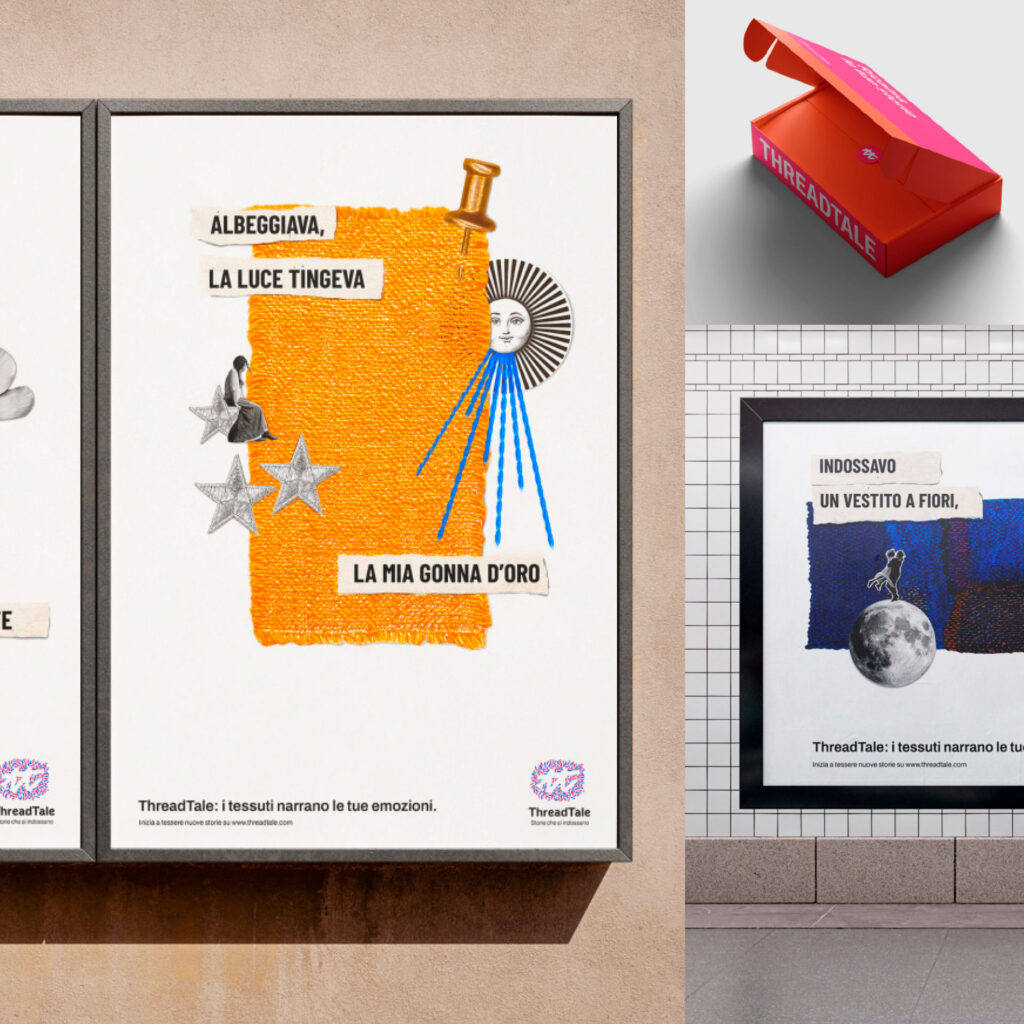
Too often, clothes are forgotten or discarded too soon, victims of fast fashion and rapid consumption. The project seeks to reverse this logic, giving garments a second life through mending, creative recycling and upcycling. Restoring value to textiles means respecting resources, preserving craft traditions and creating new aesthetic possibilities. ThreadTale combines manual techniques and digital tools in an ecosystem of tutorials, events, customised boxes and an interactive community sharing stories, advice and sustainable practices. Every stitch becomes an opportunity to pass on knowledge and weave new narratives: a repaired hole is no longer a flaw to hide, but a detail that enriches the garment’s story.

Accreditation in Italy
Accredia
Certifications and standards against greenwashing
Accreditation plays a crucial role by ensuring the credibility and reliability of measurements and certifications, as well as compliance with international standards. Today, numerous accredited certification schemes are available, such as UNI/TS 11820, which provides guidelines for measuring and assessing an organisation’s circularity performance, and End of Waste, ReMade and Plastica Seconda Vita certifications, which verify the recycled content of products and the sustainability of recovery processes. Accredited certifications offer tangible benefits: to businesses seeking to demonstrate their commitment to social responsibility and the circular economy; to consumers looking for reliable and sustainable products; and to public administrations that need to demonstrate the country’s contribution to sustainable development goals.

MUSH Biodesign
Universidad de las Américas (Ecuador)
From fungal mycelium to design objects
From the academic world to professional practice, MUSH has established an innovative approach: each design piece is made from agricultural waste transformed into living material, handcrafted into organic forms. The collections – Luminarias, Celia, Voronoi and Mobiliario – explore the aesthetic and structural potential of mycelium, creating objects with strong symbolic and ecological value. The resulting material is lightweight, durable and non-toxic, making it suitable for indoor environments. Every stage of the process follows environmental responsibility criteria: reducing the carbon footprint by up to 87%, using water efficiently and valorising local agricultural waste. MUSH has received international recognition, including the Grand Prix Lux Small Business Idea 2023, as well as carbon-neutral company certification.

Cherry Bag
Universidad de las Américas (Ecuador)
Reinterpreting the Latin American spirit through a contemporary language
Agustín Coronel developed the project by exploring a collection of bags where delicacy and technology, maximalism and sustainability, craftsmanship and 3D printing coexist. The main issues addressed are standardisation in fashion, pollution and poor working conditions, which affect consumers’ individuality and personality. By bringing innovation into fashion production processes through 3D technology and biomaterials, it becomes possible to create a tangible solution that reduces environmental impact and improves working conditions. The project won Gold in the Accessories / Bags / Luggage category and the People’s Choice Fashion Design Award at the IDA Design Awards 2025.

BluExo
ISIA Pordenone
Turning the blue crab from a concern into a resource
The BluExo project applies ecodesign and circularity principles to transform the blue crab (Callinectes sapidus), an invasive species and a source of environmental concern, into a useful material, following the hierarchy of waste prevention, reuse and recycling. This approach has led to two products: BluExo Paper, a composite material made from recycled paper and blue crab shell, proposed as an alternative to expanded plastics used in packaging; and BluExo Edible Skin, an edible and soluble film for food preservation, capable of indicating freshness and dissolving during cooking, leaving no packaging waste. What makes the project unique is the combination of environmental remediation and material creation. Unlike common bio-based alternatives, BluExo does not simply replace one raw material with another, but reclassifies an invasive species as a resource, while Edible Skin integrates a food function instead of ending up as waste.

Alabastro Bees
ISIA Firenze
Giving alabaster waste a new life
The master’s thesis Alabastro Bees, developed at ISIA Firenze, addresses a long-standing issue in the stone industry: the disposal of sludge and dust, here transformed into value and a culture of recycling. The aim is to remove tonnes of waste from the supply chain that would otherwise generate high economic and environmental costs. The research explores materials, processes and applications based on waste from Volterra alabaster, with the aim of enhancing its cultural and craft heritage. The powder is used to create a composite material that can be reintroduced into production cycles. After numerous tests with natural or animal-based glues, resins and rubbers, the project proposes a mixture of alabaster powder and bleached wax. Once returned to a liquid state, the two materials can be reprocessed, creating a potentially endless cycle. Alabastro Bees received international recognition through the ADI Index.
Smashing Plastic
ISIA Firenze
From recycled polymers to the B2B market
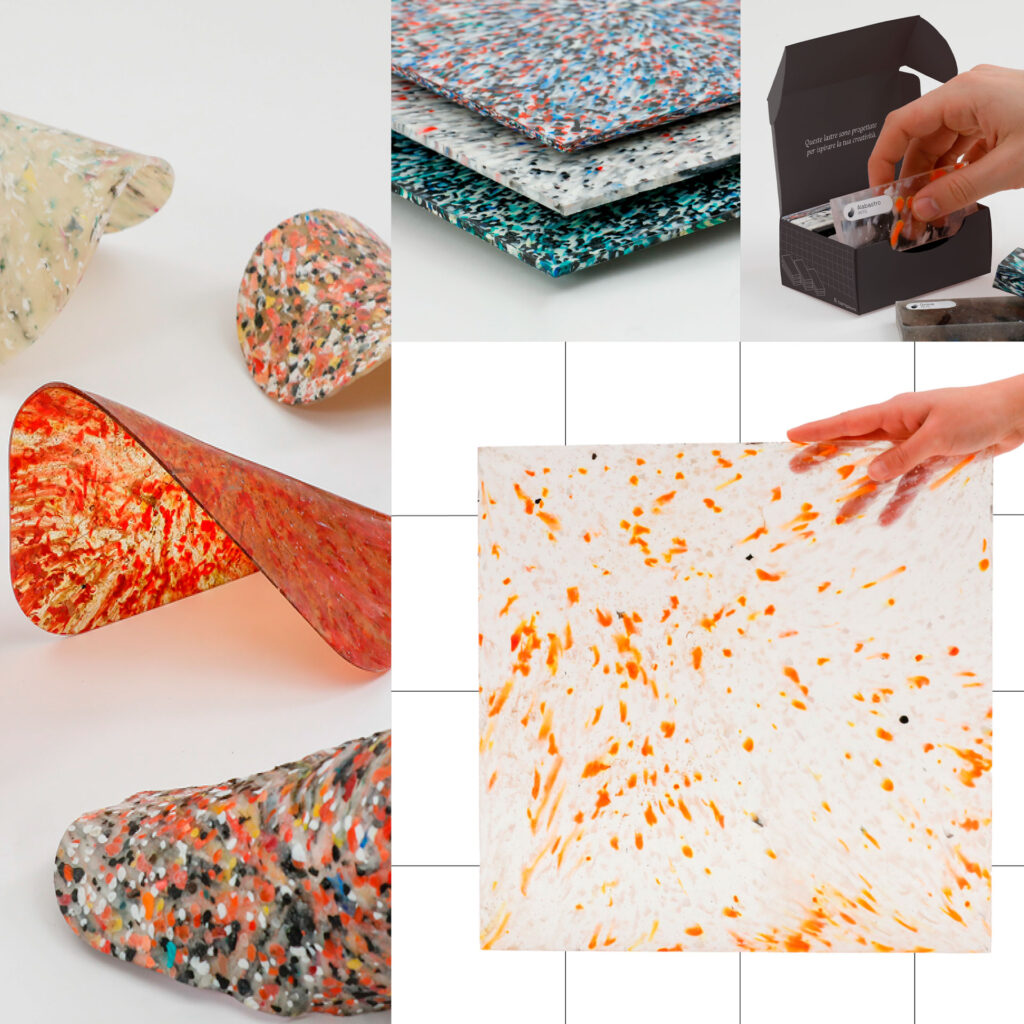
The collaboration with Smashing Plastic began with the design of a pendant lamp featuring a recycled plastic shade. This led to the decision to dedicate the bachelor’s thesis to the brand’s visual and communication development, rethinking its market positioning. Founded in 2022, Smashing Plastic combines expertise in 3D printing with experience from the Precious Plastic community, transforming plastic waste into sheets for new products. The main challenge in the sector is standardisation: working with waste makes it difficult to ensure uniformity, often limiting production to a craft scale. The company stands out thanks to a steady supply of pre-consumer industrial waste from a major Florence-based company. However, as with all recovery projects, the virtuous cycle remains temporary: in today’s consumer-driven context, these initiatives mitigate damage that already exists. The real solution requires eliminating the very concept of waste and redesigning the entire production cycle.

Freak’t
ISIA Pescara
Regenerating abandoned industrial spaces
Freak’t addresses the growing need to regenerate disused industrial areas through a circular, low-impact and replicable transformation model. In line with the waste hierarchy, it prioritises the reuse of existing structures, avoiding demolition and reducing emissions, waste and the consumption of new resources. The project integrates solutions for energy self-sufficiency (photovoltaics, storage systems and heat pumps) and water efficiency (rainwater collection and reuse). The materials used – hemp, wood and lime-based plasters – are natural, locally sourced and recyclable, with a low impact throughout their life cycle. An on-site waste separation and composting system turns organic waste into a resource for vegetable gardens and green roofs. The project stands out for its balance between flexible functionality, architectural identity and industrial aesthetics, integrating forms of collective and material intelligence to foster environmental and social innovation, with the active involvement of the community.

Alizé
ISIA Firenze
An evolving object for an essential life
Alizé is based on a primary wooden structure that can be assembled without tools and is designed to adapt over time to changing needs. Its essential form embraces multifunctionality, allowing a single object to serve multiple uses and remain relevant over the years. The packaging – a fabric cloth secured with a leather strap – avoids excess and becomes an integral part of the user’s life, going beyond its initial function. By focusing on raw, sustainable materials and a minimal system designed for durability and versatility, Alizé promotes a lifestyle based on fewer, but more meaningful objects. What sets it apart is the balance between simplicity and openness: a product that does not impose itself, but adapts, growing with the person who uses it.

SPORTAmi con te
ISIA Faenza
Towards eliminating plastic from local markets
Developed with the Municipality of Faenza, SPORTAmi con te promotes the use of durable, reusable bags in local markets, distributing 1,000 bags made from textile waste. The project addresses the environmental impact of everyday habits through an eco-innovation approach combining design quality, material recovery and social inclusion. The bags are made from fabrics recovered from local companies, including materials damaged by recent floods, transforming waste according to the materials hierarchy principles of prevention, reuse and recycling. Unlike commercial alternatives, the project stands out for its local identity, dedicated graphics and civic value, involving associations and vulnerable workers in a collective process of material regeneration. Its impact is measured through waste reduction, short supply chains and product durability, with a commitment to monitoring avoided emissions and the awareness generated within the community.
By becoming a partner, you can present your eco-innovative project to a strategic network of EU institutions and key stakeholders in the ecological and digital transition.