Habitus – A Bite Towards the Future

Habitus emerged from the need to rethink the contemporary food system, which is characterized by high consumption of land, water, and energy, biodiversity loss, and waste generation. The project analyzes the agri-food chain and aims to make production and consumption more sustainable through the diversification of food resources. In particular, it explores the potential of novel foods, such as edible insects, algae, and hydroponic cultivation, focusing on the main barrier to their diffusion: the cultural and perceptual difficulty of accepting foods that are unfamiliar to people’s everyday lives.  
0
Bioeconomy
0
Ecodesign
Low-impact Textiles
Artificial Intelligence
0
Digital Product Passport
0
Traceability
0
Circular Business Models
0
Life-Cycle Thinking
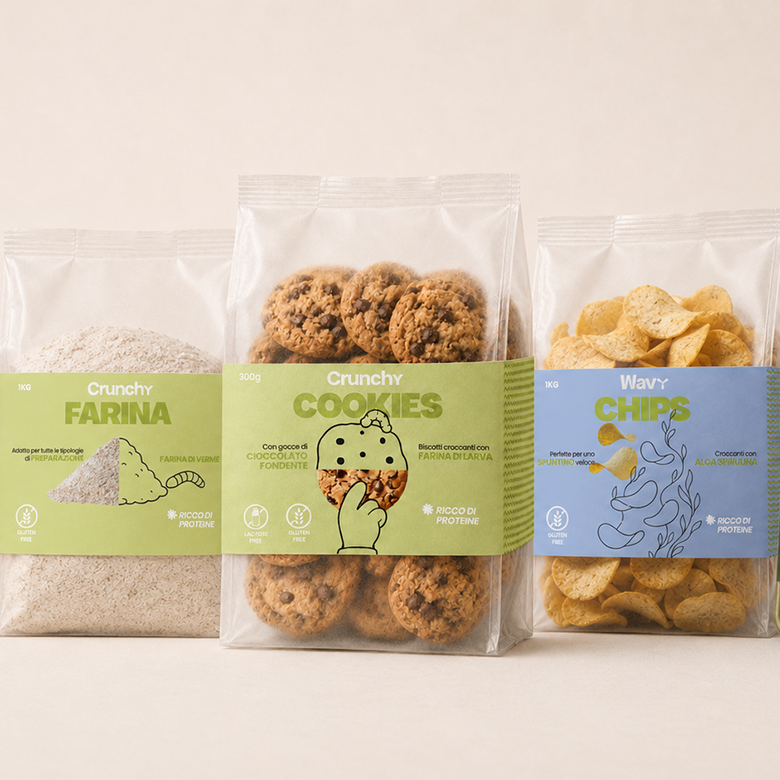
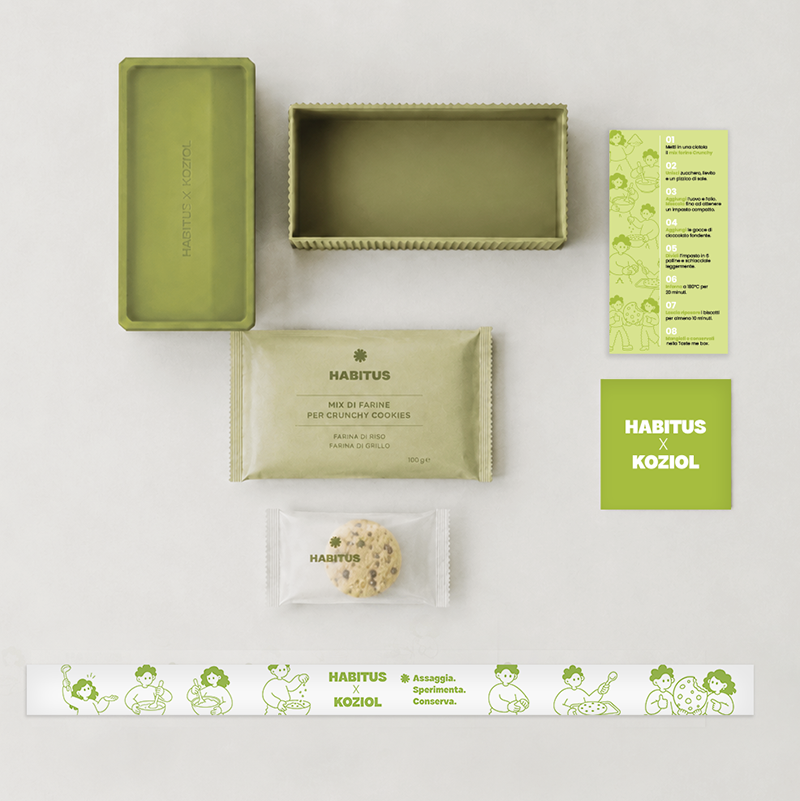
Habitus is a design ecosystem in which production and consumption progressively move closer together. Through products, physical spaces, itinerant activities, and domestic modules, the project introduces people to new food resources and the processes that make them possible. Self-production is a central element. Growing, breeding, and transforming part of one’s own food makes the supply chain visible and allows people to take a more active role in the food system. Homes, cities, and production sites become parts of a dynamic and integrated network. HABITUS is a startup-ecosystem that aims to make novel foods part of everyday diets, including insects, algae, and hydroponic cultivation, through three product lines—Crunchy, Wavy, and Growly—urban hubs, domestic self-production modules, and an electric-bike food truck powered by solar panels. Ecodesign is developed through compostable cellulosic film packaging and FSC recycled-paper labels. The reusable Taste Me Box is made from Koziol ORGANIC BIO-CIRCULAR, a plastic derived from waste vegetable oils. The modules are made from recycled ABS, aluminum, and AISI 304 stainless steel. In terms of circularity, insects can also be fed with organic waste, while frass, exuviae, and residues are reintegrated into production cycles as agricultural fertilizers. The project addresses prevention, reuse, and recycling, while compostable materials contribute to closing the biological cycle.  
Compared with similar projects, Habitus does not focus exclusively on production feasibility or the sale of insect-based food products. It primarily addresses the cultural acceptance of novel foods, using design as a means of mediating perceptions, imaginaries, and habits. The design choice is not yet supported by measurement, but measurement is planned. Habitus is currently a design concept developed as part of a degree thesis. The research includes an estimated comparison between cattle and locust farming, considering water consumption, feed consumption, CO₂ emissions, land use, and the edible portion of the food resource. The comparison considers 600 kg of cattle and 600 kg of locusts: water consumption of 9,000,000 L and 2,400,000 L; feed consumption of 5,000 kg and 1,020 kg; CO₂ emissions of 16–36 tonnes and 0.6–3 tonnes; land use of 1–2 hectares and less than 0.1 hectares; and edible portions of approximately 40% and 80%. The estimated result is an overall impact reduction of up to 80%.  

TEAM
Jessica Zandomenego


SUPERVISOR 
Alessandro Spalletta

CO-SUPERVISOR 
Elena Rausse