MAIA – Advanced Materials, Open Infrastructure

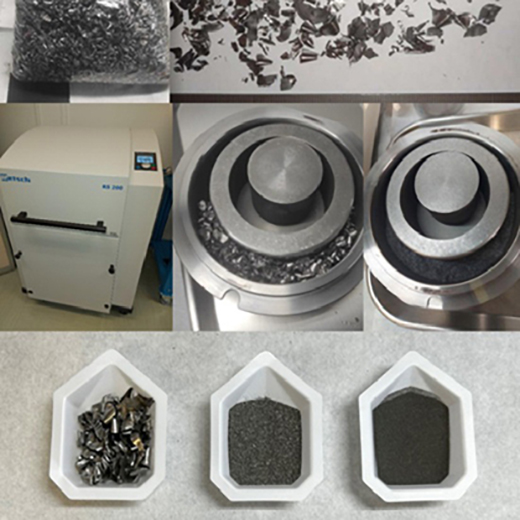
The MAIA project, co-funded by the Lazio Region, emerged from the need to reduce the consumption of virgin raw materials and waste in advanced manufacturing sectors. The infrastructure provides research services and activities in the fields of additive manufacturing and advanced diagnostics, promoting circular production models. The main raw materials used are metal, polymeric and ceramic powders, which enable the production of high-performance components while minimising material waste. At the end of their useful life, these components can be recovered, recycled and transformed back into powders, supporting a potentially continuous reuse cycle and a significant reduction in waste.  
0
Bioeconomy
0
Ecodesign
Low-impact Textiles
Artificial Intelligence
0
Digital Product Passport
0
Traceability
0
Circular Business Models
0
Life-Cycle Thinking
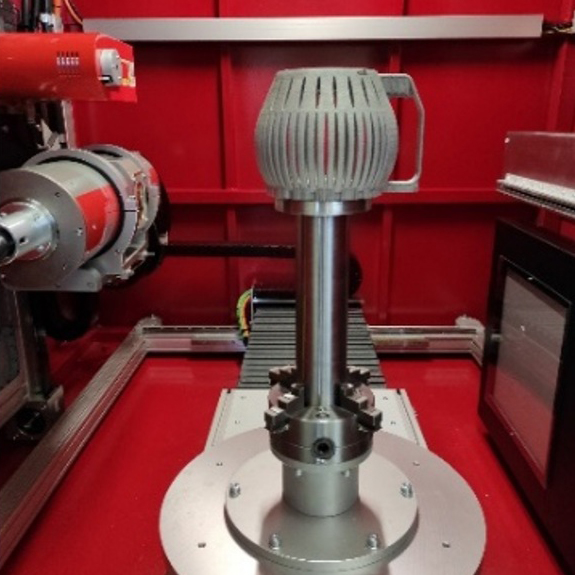
The infrastructure focuses on the development of innovative materials for additive manufacturing technologies, adopting eco-design approaches based on advanced digital models. These approaches make it possible to optimise component geometries and performance while reducing raw material consumption and production waste. Activities include component qualification, structural integrity monitoring and traceability throughout the life cycle, supporting durability, predictive maintenance and extended service life. The use of advanced thermomechanical treatments, such as Hot Isostatic Pressing, makes it possible to recover defects and regenerate components, in line with the prevention and reuse principles established by the waste hierarchy. Additive technologies also enable the production of lightweight components with a reduced number of parts to be assembled, minimising waste generation. The infrastructure further develops processes for recovering and valorising metal waste, which is reused as secondary raw material through the integration of micro- and nanostructured fillers, such as ceramic particles for MCC. This approach improves material performance while reducing the overall consumption of critical and strategic raw materials. MAIA stands out as an open and integrated infrastructure covering the entire innovation value chain, from material design to the development, production, characterisation and validation of advanced components. Unlike comparable solutions, it provides SMEs, startups and high-tech companies with direct access to specialised expertise and advanced technologies for additive manufacturing, diagnostics and material integrity control.  
Through dedicated training programmes, users can independently operate the equipment to develop and prototype innovative products. The open approach, strong integration between research and industry, and focus on circularity represent the infrastructure’s main distinctive features. The design choice is not yet supported by measurement, although measurement is planned. The infrastructure’s impact is demonstrated by the growing number of services provided to national and international companies, universities and research centres operating in the aerospace, engineering and biotechnology sectors. Activities have included the development of prototypes in metallic, composite and biocompatible materials, non-destructive testing, dissimilar-material welding, microstructural characterisation and thermomechanical treatments. Through the use of additive manufacturing and advanced recovery and repair technologies, the infrastructure contributes to waste reduction, the extension of component service life and the efficient use of resources. The infrastructure is currently fully operational and serves the local and wider territory.  

TEAM
Giuseppe Barbieri, Daniele Mirabile Gattia, Massimo Moncada, Angelo Tatì, Ugo De Angelis, Giuseppe De Santis, Cristina Stifani, Marzia Pentimalli, Francesco Cognini, Alessandra Fava, Fabio Bergamini, Marco Fortunato, Francesca Varsano, Mariangela Bellusci, Noemi Fiaschini and Federico Lazzaroni.


SUPERVISORS 
Several students have also been trained by ENEA tutors and involved in activities related to the infrastructure.