OSTĒA – BONE BIO PLASTIC

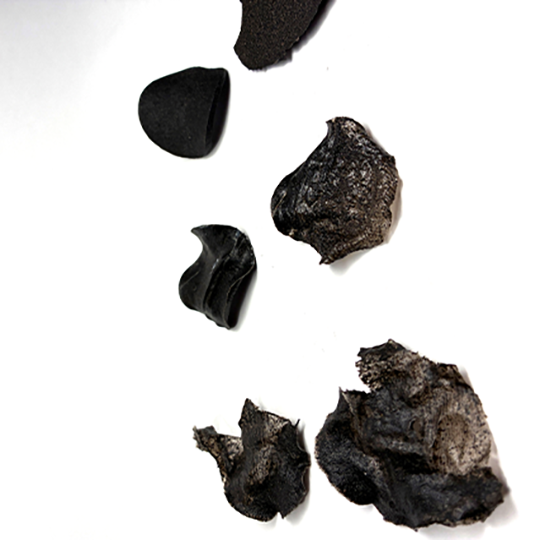
OSTĒA is a biomaterials research project that transforms bone waste from the food supply chain into a sustainable bioplastic. Through sterilisation, crushing and the use of collagen as a natural binder, the material is shaped for design applications. The experimentation includes two variants, OSTĒA White and OSTĒA Black, the latter obtained through the carbonisation of bones. The project valorises an organic residue, promoting the circular economy, waste reduction and material innovation. By integrating scientific research, sustainability and design, OSTĒA proposes new production possibilities and reflects on the cultural value of waste as a resource.  
0
Bioeconomy
0
Ecodesign
Low-impact Textiles
Artificial Intelligence
Digital Product Passport
Traceability
0
Circular Business Models
0
Life-Cycle Thinking
OSTĒA transforms bone waste from slaughtering processes into a self-produced bioplastic. Bone already contains both components of a composite material: extracted collagen acts as the binder, while bone powder functions as the mineral filler. The low-tech process includes boiling, degreasing, crushing, casting and drying. Carbonisation is an alternative process that produces OSTĒA BLACK alongside OSTĒA WHITE. The project adopts an eco-design approach based on the use of waste rather than virgin resources, without competing with the food supply chain. The material is monomaterial and contains no synthetic additives. Its thermoreversible binder allows it to be remelted. The process has a low energy intensity and can be implemented through distributed production. Within the waste hierarchy, bone is redirected from recovery or disposal towards recycling and upcycling. Replacing fossil-based plastics also contributes to waste prevention. At the end of its life, the material is described as compostable and capable of returning phosphorus and calcium to the soil, closing the biological cycle through cascading use. Compared with agricultural bioplastics, OSTĒA does not require land or compete with food production. Unlike mycelium- or chitin-based biomaterials, it does not require cultivation or controlled biological growth. Compared with traditional uses of bone meal, such as fertiliser, animal feed or gelatin, the project valorises waste as a structural material through upcycling.  
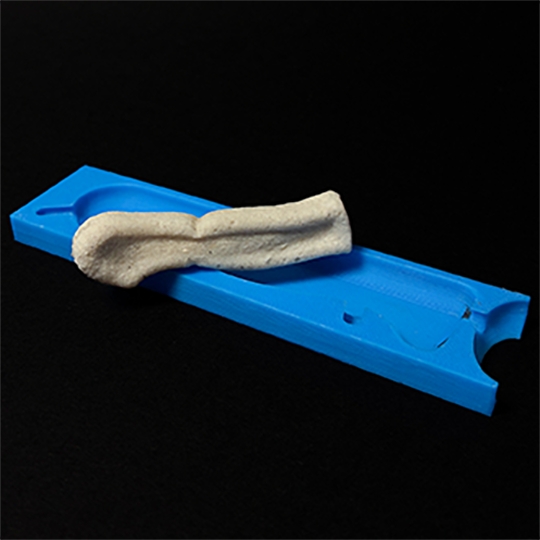
The distinctive feature of the project is its material self-sufficiency: both the binder and the mineral filler derive from the same source, without external additives. The design choice is not yet supported by measurement, but measurement is planned. The project is currently in the research stage and at the prototyping phase (TRL 3–4). A six-stage processing cycle has been validated, and two material variants, OSTĒA White and OSTĒA Black, have been produced and sampled using silicone and PLA moulds. The characterised parameters include a 10-minute pot life, a drying time of 7–10 days and a final moisture content below 10%. The estimated potential concerns approximately 130 billion kilograms of bone waste generated annually by slaughtering processes, currently directed towards rendering, incineration or disposal. LCA studies, standardised mechanical tests and quantitative estimates of avoided emissions have not yet been carried out. No awards or recognitions have been obtained.  

TEAM
Mattia Baron


SUPERVISORS 
Elena Rausse