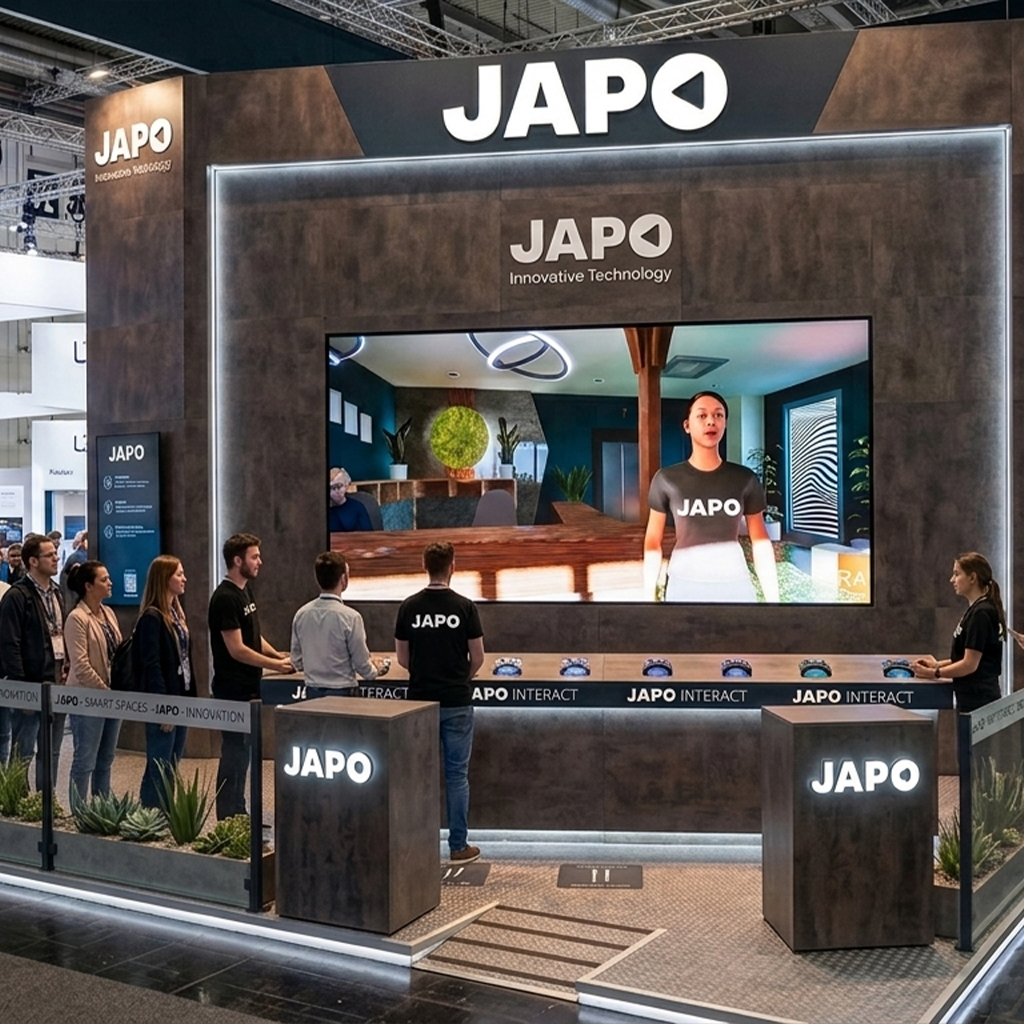
Real-time Digital Twin and Conversational AI for Low-impact B2B Trade Fairs

The project was developed to address the high environmental and logistical impact of trade fairs and B2B events. Traditionally, the presentation of industrial machinery, prototypes and temporary installations involves significant CO₂ emissions from cross-border transportation, as well as the production of single-use waste, including wooden structures, plastic materials and printed catalogues. studioJAPO operates within the field of digital services for businesses and experiential marketing, proposing technological dematerialisation as a concrete response to the decarbonisation and ecological transition of commercial events.
Bioeconomy
0
Ecodesign
Low-impact Textiles
0
Artificial Intelligence
0
Digital Product Passport
0
Traceability
0
Circular Business Models
0
Life-Cycle Thinking
studioJAPO designs real-time interactive 3D environments, or Digital Twins, integrated with virtual assistants equipped with multilingual conversational artificial intelligence. From a service eco-design perspective, the project addresses the highest levels of the waste hierarchy: prevention and reduction at source. By replacing physical prototypes and single-use installations with interactive digital twins, the project prevents the production of physical waste associated with exhibition stands, promotional materials and printed catalogues. The solution follows circular economy principles through a model of virtual reuse and regeneration. The 3D infrastructure and artificial intelligence can be updated, modified and reused for different events or corporate web channels, extending the service’s life cycle and reducing the obsolescence of physical exhibition materials. Compared to conventional static video renders or passive 360° virtual tours, studioJAPO offers a high-fidelity, real-time, natively three-dimensional experience that can be freely navigated through a browser or physical controllers. Its distinctive feature lies in the integration of an avatar equipped with conversational artificial intelligence: users are not simply spectators but can interact by voice with a virtual assistant trained on the company’s technical data. This combines a significant reduction in carbon footprint with a high level of engagement and multilingual accessibility.
The design choice has not yet been supported by measurement, although measurement is planned for subsequent project stages. The project is fully operational and scalable on the global market. The estimated impacts for a medium-sized exhibition event include a 100% reduction in CO₂ emissions associated with the cross-border transportation of heavy machinery and physical samples, the elimination of plastic and wooden waste from single-use temporary installations, and a 100% saving in printed promotional materials. Brochures and catalogues are replaced by AI systems that send technical materials via email or QR codes during the interaction. The solution can also be reused indefinitely, reducing marginal impact costs with each new use.

TEAM 
Jacopo Pomante (Founder and 3D/AI Developer, studioJAPO)